
The 4 AM Anxiety Trap: Why Your Brain Wakes Up in a Panic and How to Fix It
It’s the same story every night: You fall asleep exhausted at 11 PM, but like clockwork, your eyes snap open at 4 AM. Suddenly, your mind is racing. You’re worrying about your finances, your children’s future, or an awkward comment you made three years ago. In the stillness of the night, these problems feel insurmountable.
This isn’t just “stress.” It is a physiological event that I call the 4 AM Anxiety Trap. As a Senior Health Specialist, I want to show you that this isn’t a sign of mental weakness—it is a predictable biological glitch that occurs in the midlife brain.
1. The Chemistry of the 4 AM Wake-Up
Around 3 to 4 AM, your body undergoes a massive internal shift. Your core temperature begins to rise, and your levels of Melatonin (the sleep hormone) start to drop, while Cortisol (the stress/alertness hormone) begins its morning ascent.
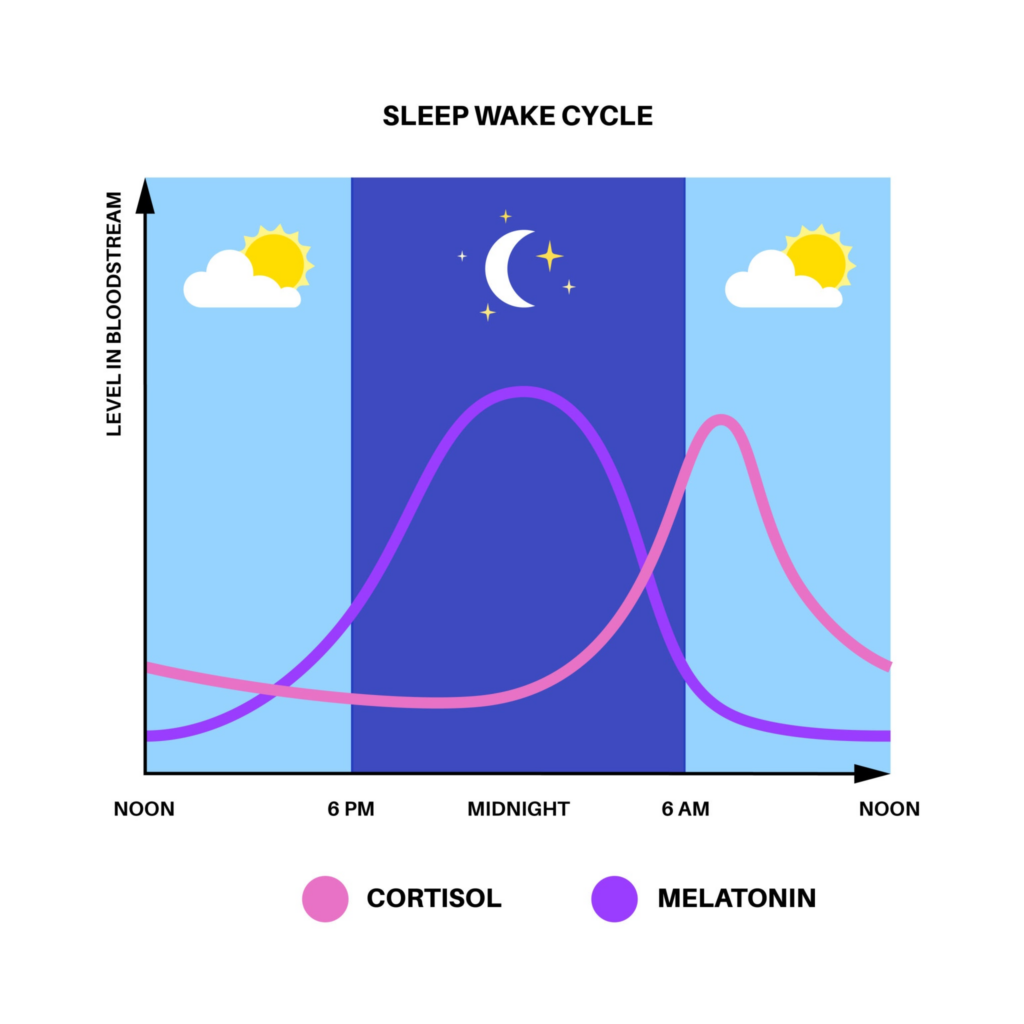
In our 50s and 60s, our sleep architecture becomes more fragmented. We spend less time in deep, restorative sleep and more time in light REM sleep. When you hit that “low point” of blood sugar and hormone transition at 4 AM, your brain’s Amygdala (the fear center) becomes hyper-sensitive. Without the logical Prefrontal Cortex fully online to calm you down, your brain interprets this physiological dip as “danger,” triggering a flood of anxious thoughts.
2. Blood Sugar and the “Emergency” Wake-Up
One often overlooked culprit is Nocturnal Hypoglycemia (low blood sugar at night). If you ate a high-sugar or high-carb snack before bed, your insulin may have spiked and then crashed in the middle of the night.
When blood sugar drops too low, the brain panics. It views low fuel as a life-threatening emergency and releases adrenaline to tell the liver to release more glucose. That adrenaline spike is exactly what makes you feel “wired and tired” at 4 AM. Your heart races not because you’re a failure, but because your brain thinks you’re starving.
3. A Case Study: The “15-Minute Rule”
I worked with a 54-year-old executive named Sarah who spent two hours every night staring at the ceiling in a state of panic. She felt she was “losing her mind.” We implemented a simple neurological reset called the “15-Minute Rule.”
If Sarah couldn’t fall back asleep within 15 minutes, she was instructed to get out of bed, go to a different room with very dim light, and do a “Brain Dump”—writing down every single worry on a piece of paper. This moved the anxiety from the emotional Amygdala to the analytical Prefrontal Cortex. By physically leaving the bed, she stopped her brain from associating her mattress with a “battleground.” Within three weeks, her 4 AM wake-ups dropped from nightly to once a month.
4. How to Disarm the Trap
To stop the 4 AM panic, you need to manage your biology before you reach the bedroom:
A. The “Protein Bridge”
Try a small, high-protein snack 1-2 hours before bed (like a few walnuts or a spoonful of almond butter). This stabilizes your blood sugar throughout the night, preventing the adrenaline spike that causes the “panic wake-up.”
B. Physiological Sighing
If you wake up, do not check the clock. Instead, perform the Physiological Sigh: Inhale deeply through your nose, take a second tiny “sip” of air at the very top to fully expand the lungs, and then exhale slowly through your mouth. This hack instantly lowers your heart rate and signals to your nervous system that you are safe.
C. The “Cognitive Shuffle”
To stop racing thoughts, try the “Cognitive Shuffle.” Pick a word (like “GARDEN”). Visualize an image for each letter: G for Goat, A for Apple, R for Rain. This scrambled mental imagery mimics the onset of dream states and tricks your brain into falling back into sleep mode.
A Final Thought: The Sun Always Rises
Everything feels 100% worse at 4 AM. The brain is not equipped for complex problem-solving in the middle of the night. Remind yourself: “This is just a hormone shift. I will deal with this when the sun is up.”
By understanding the biology of your anxiety, you take the power away from the panic. You aren’t broken; you’re just experiencing a shift in the tide.
About the Author
[Better-mind] is a Senior Health Specialist and expert in circadian biology. With over 20 years of experience, they help midlifers navigate the complex intersection of hormones, stress, and sleep to achieve lasting vitality.