
Easing Aches: Your Anti-Inflammatory Diet Guide for Midlife Joint Pain Relief
As we transition into our 50s and 60s, we often begin to experience a new, unwelcome morning companion: stiffness. Whether it’s a dull ache in the knees or a sharp twinge in the fingers, joint pain is frequently dismissed as an inevitable part of “getting older.” However, as a Senior Health Specialist, I’ve found that much of this discomfort isn’t just structural wear and tear—it is driven by systemic inflammation.
The good news is that your kitchen is as powerful as your medicine cabinet. By adopting an Anti-Inflammatory Diet, you can actively lower the chemical triggers of pain and reclaim the mobility you thought was gone forever.
1. The Science of Inflammatory “Fire”
To understand how food affects your joints, we have to look at Pro-inflammatory Cytokines. These are signaling proteins that promote inflammation throughout the body. In midlife, hormonal shifts and metabolic changes can cause these cytokines to remain at chronically high levels, attacking the cartilage and synovial fluid that keep our joints moving smoothly.
Standard modern diets—high in refined sugars, trans fats, and processed flours—act like fuel on this inflammatory fire. Conversely, specific phytonutrients and fatty acids act as “coolants,” neutralizing these proteins and reducing the swelling that causes pain.
2. The “Golden Trio” of Anti-Inflammatory Foods
If you want to reduce joint pain, you don’t need a restrictive “diet.” You need to flood your system with these three biological allies:
A. Omega-3 Fatty Acids (The Natural Lubricant)
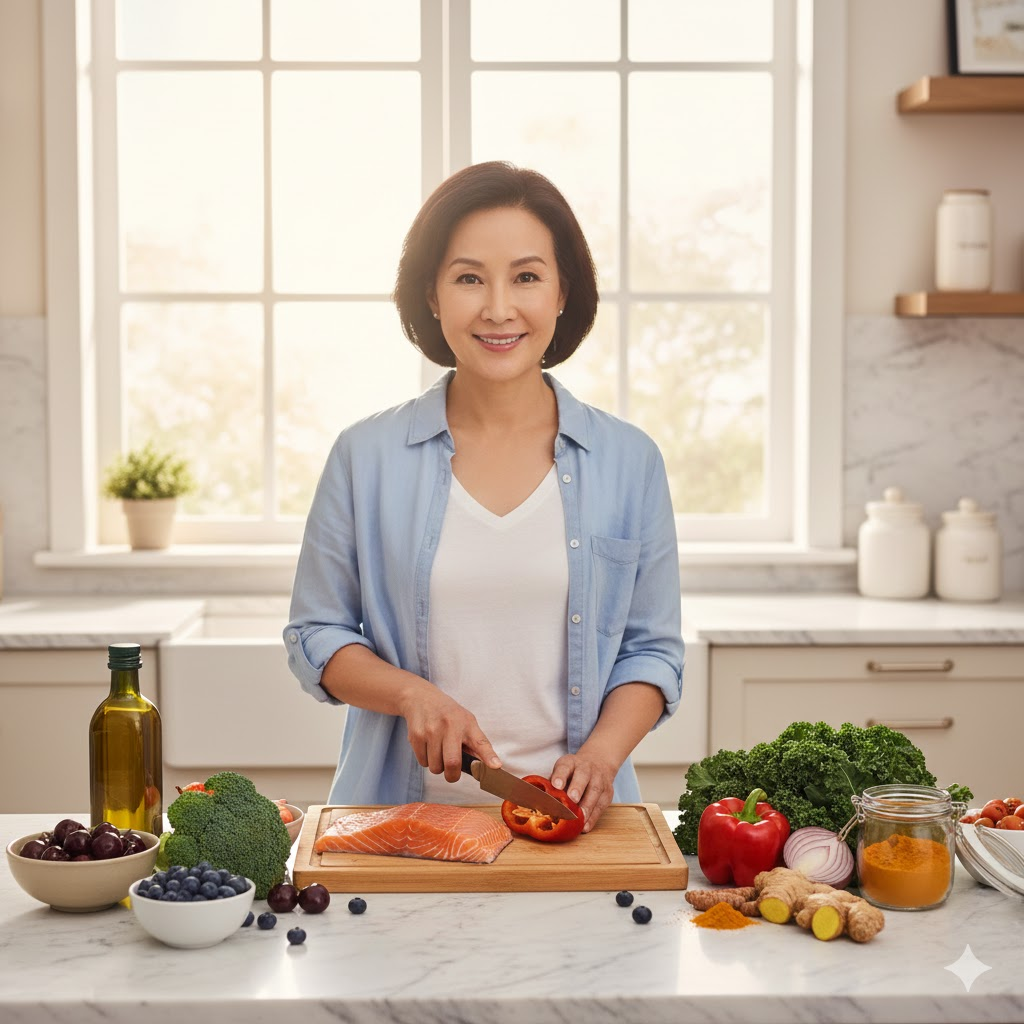
Found in fatty fish like salmon, mackerel, and sardines, Omega-3s interfere with the immune cells that cause inflammation. They act as a natural lubricant for the joints, improving flexibility and reducing “morning stiffness.”
B. Anthocyanins (The Pain Blockers)
These are the deep pigments found in cherries, blueberries, and blackberries. Studies have shown that tart cherry juice, in particular, can be as effective as some over-the-counter pain relievers for managing the symptoms of gout and osteoarthritis.
C. Curcumin & Gingerol (The Botanical Warriors)
Curcumin (the active ingredient in turmeric) and gingerol (found in ginger) are potent inhibitors of inflammatory enzymes. When combined with black pepper—which increases curcumin absorption by 2,000%—they provide a powerful, natural defense against joint degradation.
3. A Case Study: Moving Beyond the “Aspirin Cycle”
I worked with a 59-year-old hobbyist gardener named Susan who was ready to give up her flower beds because of severe inflammation in her wrists. She was taking daily ibuprofen, which was beginning to irritate her stomach lining.
We transitioned Susan to a Mediterranean-style protocol, emphasizing extra virgin olive oil (which contains oleocanthal, a compound with a similar effect to ibuprofen) and eliminating ultra-processed snacks. Within eight weeks, Susan reported a significant reduction in “flare-ups.” She wasn’t just managing the pain; she was removing the source of it. She is back in her garden today, moving with a fluidness she hadn’t felt in years.
4. 3 Simple Swaps for Immediate Relief
You don’t have to overhaul your entire life overnight. Start with these three clinical “swaps” to begin cooling your internal inflammation:
- Swap Vegetable Oils for Extra Virgin Olive Oil: Replace omega-6 heavy oils (corn, soybean) with high-quality olive oil to balance your inflammatory markers.
- Swap Refined Grains for Ancient Grains: Move away from white bread and pasta toward quinoa, buckwheat, or farro, which provide fiber that lowers C-reactive protein (a marker of inflammation).
- Swap Sugary Snacks for Walnuts and Seeds: Walnuts and chia seeds are packed with alpha-linolenic acid, which helps protect joint tissue from oxidative stress.
A Final Thought: Feeding Your Future Mobility
Your joints are the hinges of your independence. Every meal is an opportunity to either feed the inflammation or fight it. By choosing an anti-inflammatory path, you aren’t just easing today’s aches; you are protecting your ability to walk, dance, and play for decades to come.
Eat for the life you want to live. Your body is listening to every bite.
About the Author
[Better-mind] is a Senior Health Specialist with over 20 years of experience in nutritional therapy and musculoskeletal health. They specialize in helping midlifers manage chronic pain and inflammatory conditions through evidence-based dietary interventions and lifestyle modifications. This article is part of a series dedicated to empowering the 50+ community through health literacy.